
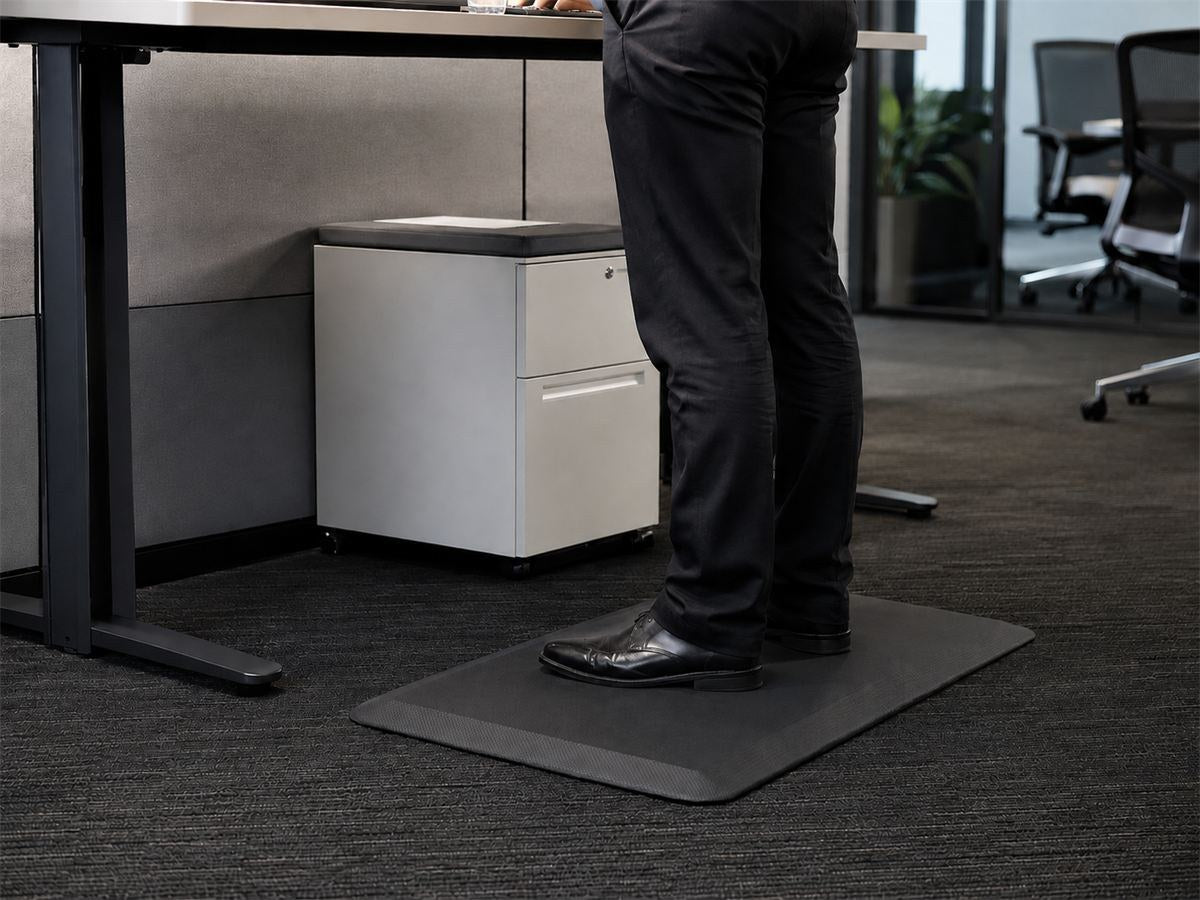
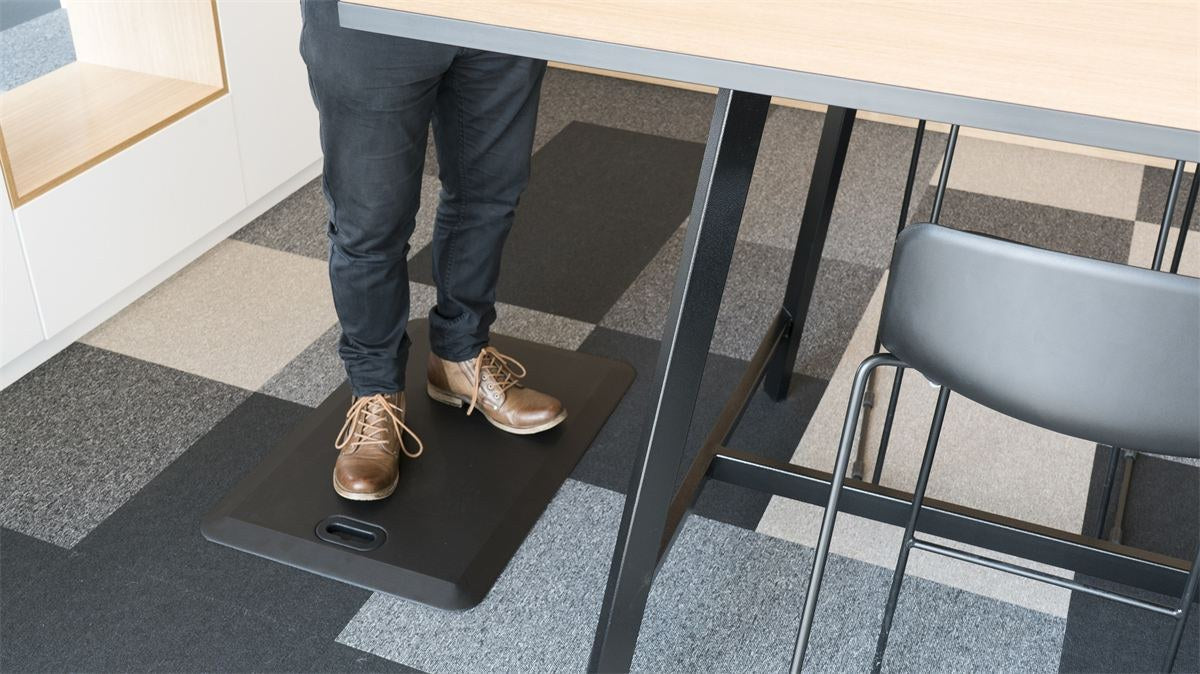
Anti-fatigue mats take the strain off your feet, legs and back when you stand in one place for long periods: at a standing desk, workbench, counter, production line or kitchen pass. The cushioned surface encourages small, constant movements in your leg and calf muscles, which keeps blood flowing and reduces tiredness and discomfort by the end of a shift.







Which anti-fatigue mat do I need?
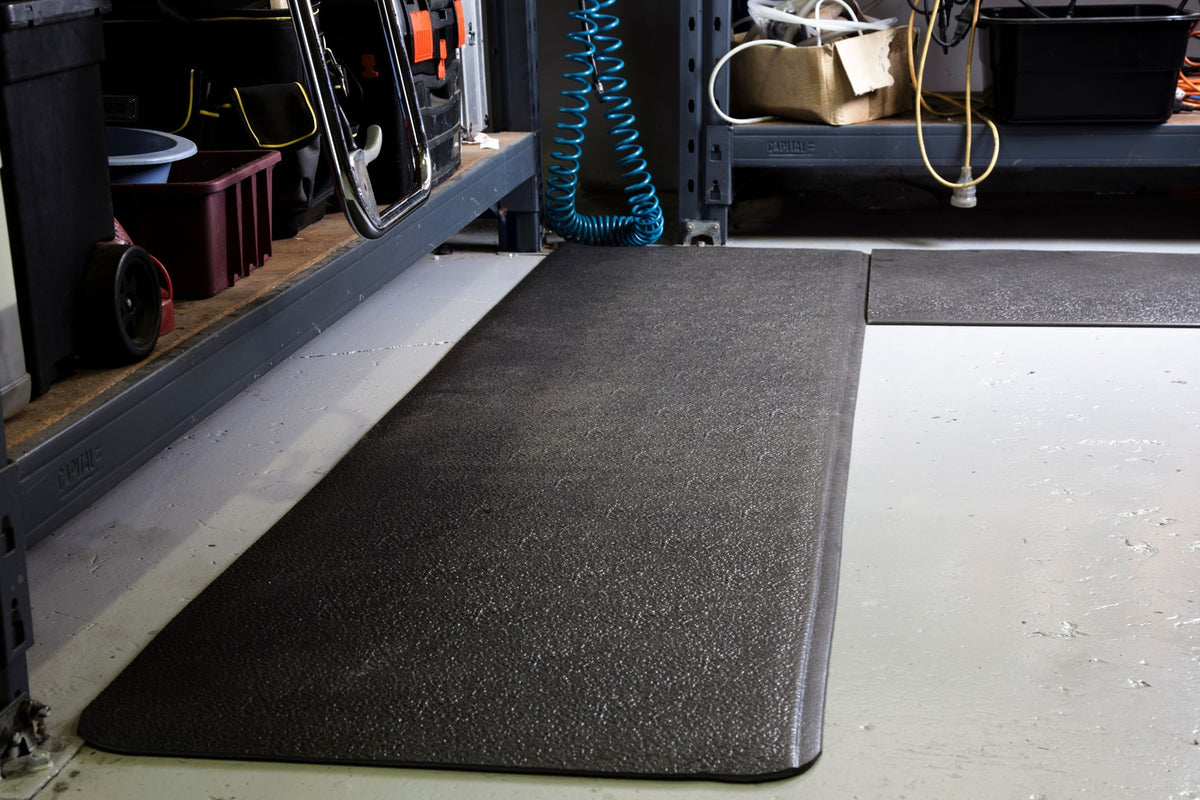
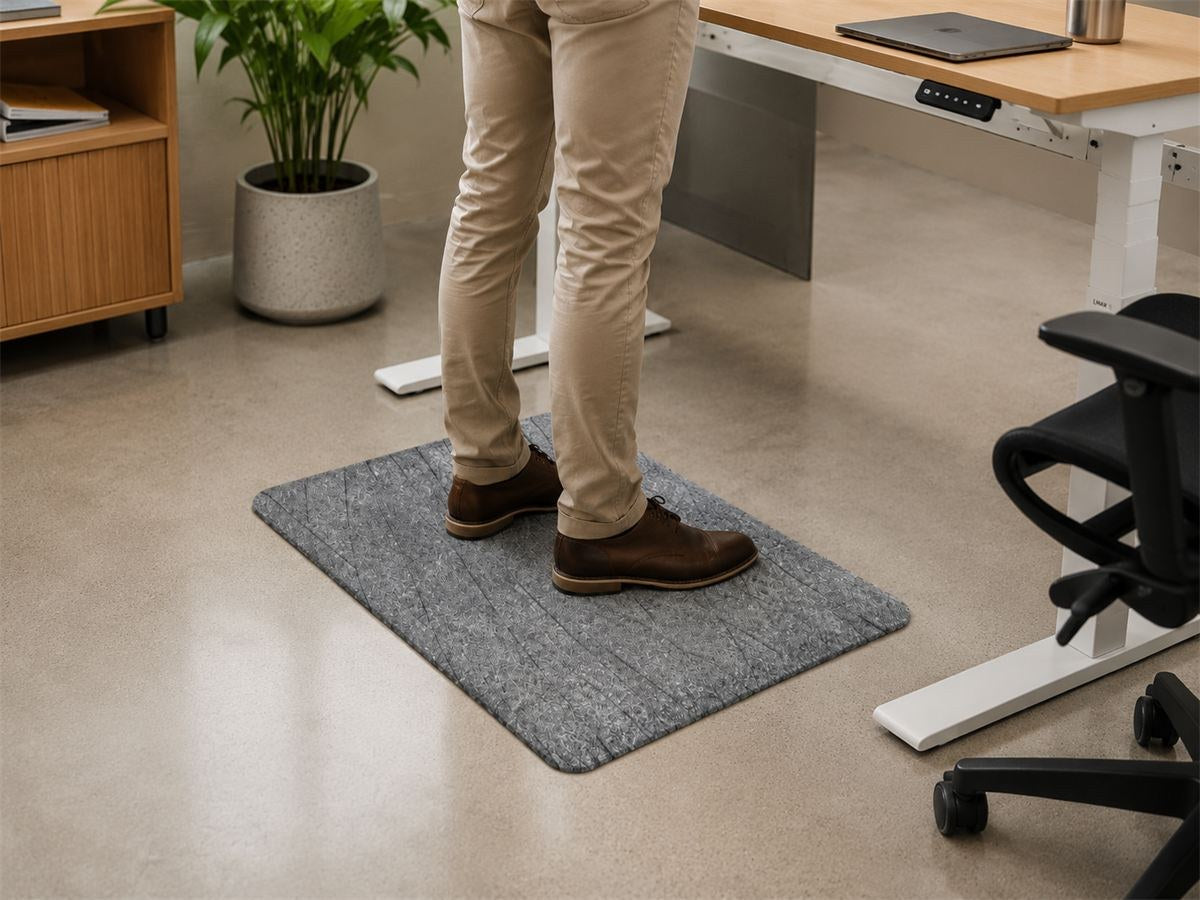
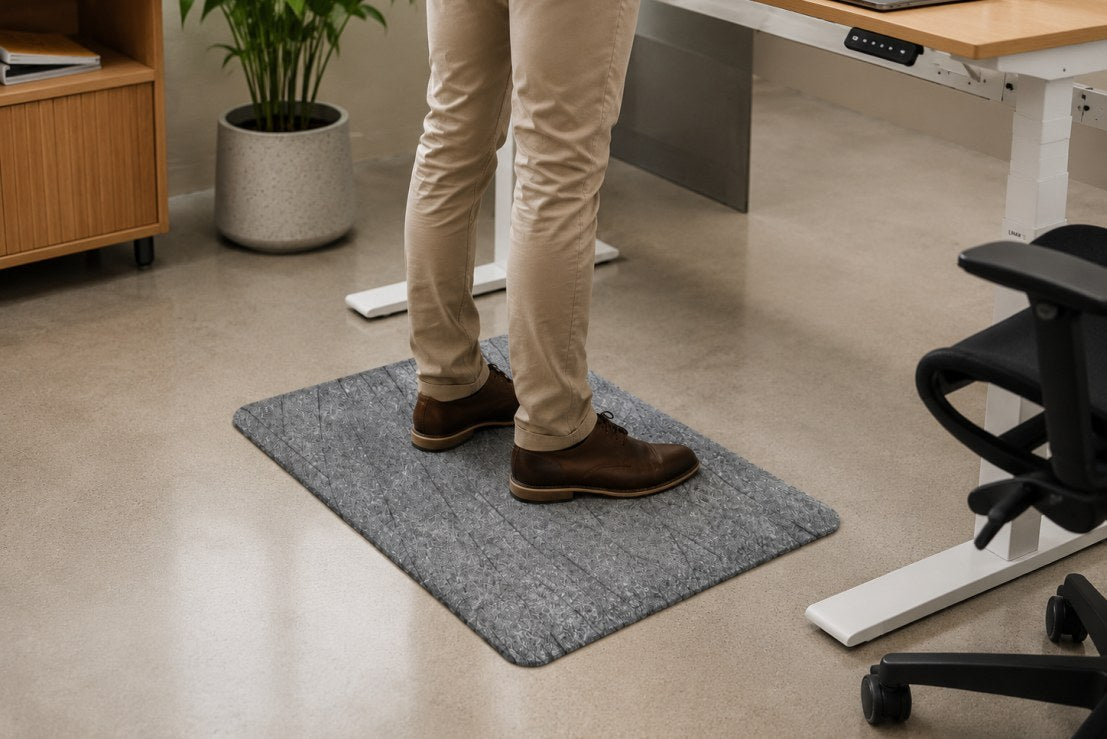
- Offices and standing desks: slim 19mm foam mats like Enhance and Energise. They have bevelled edges you won't trip on and a surface that's easy to wipe. See standing desk mats.
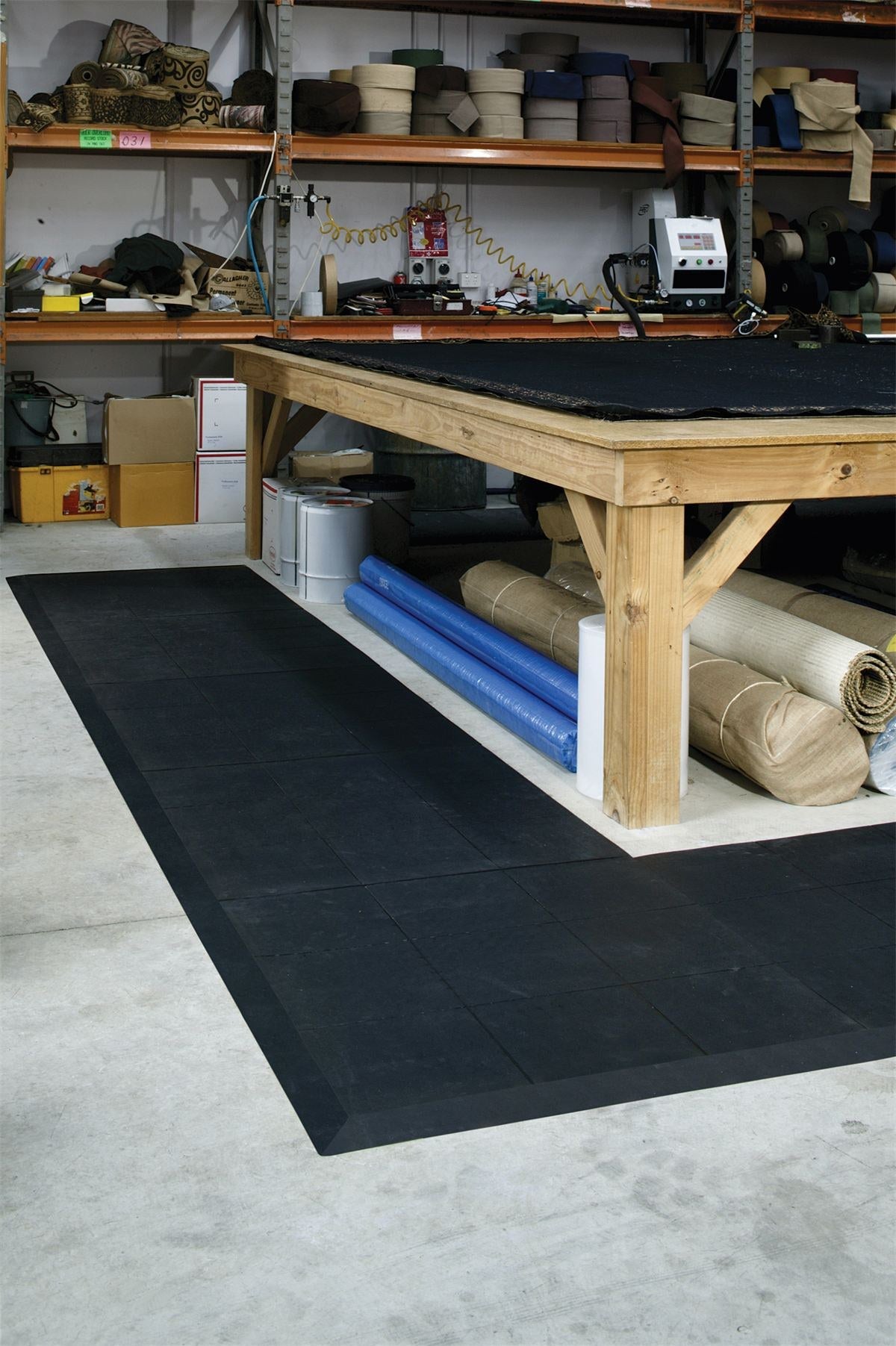
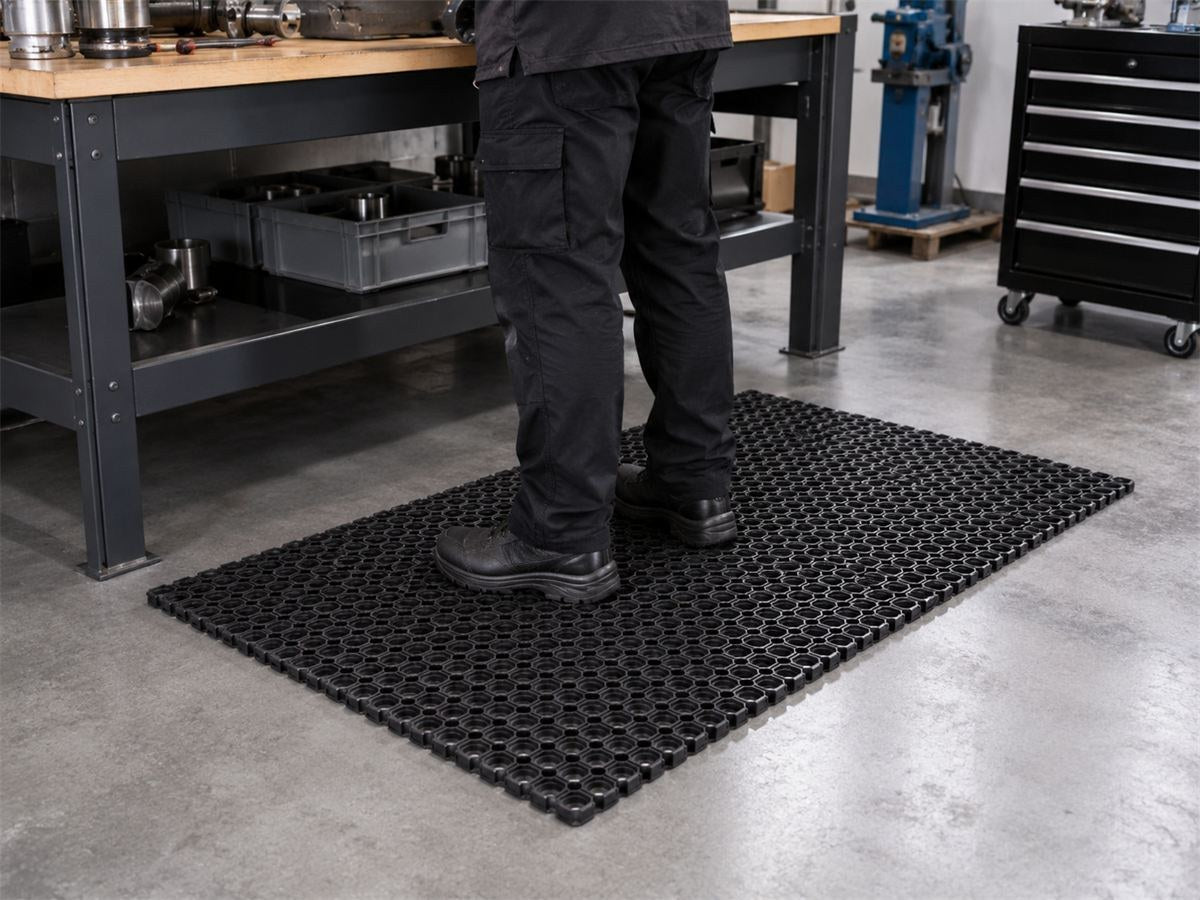
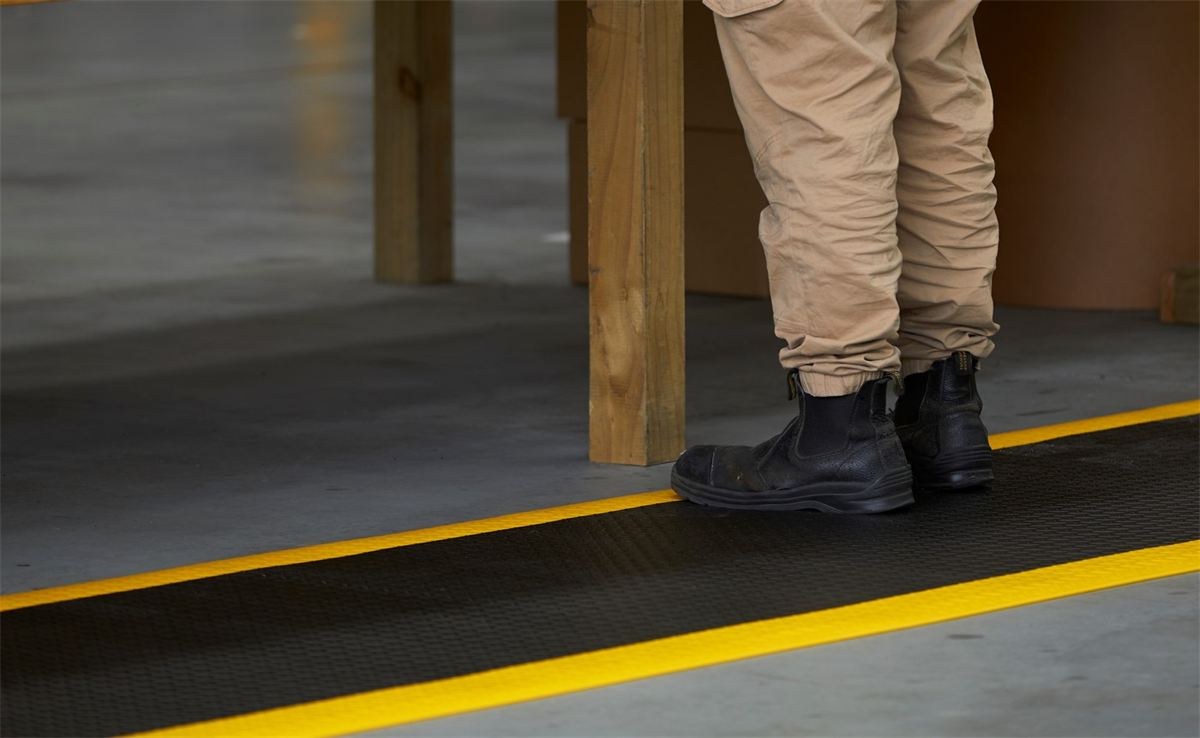
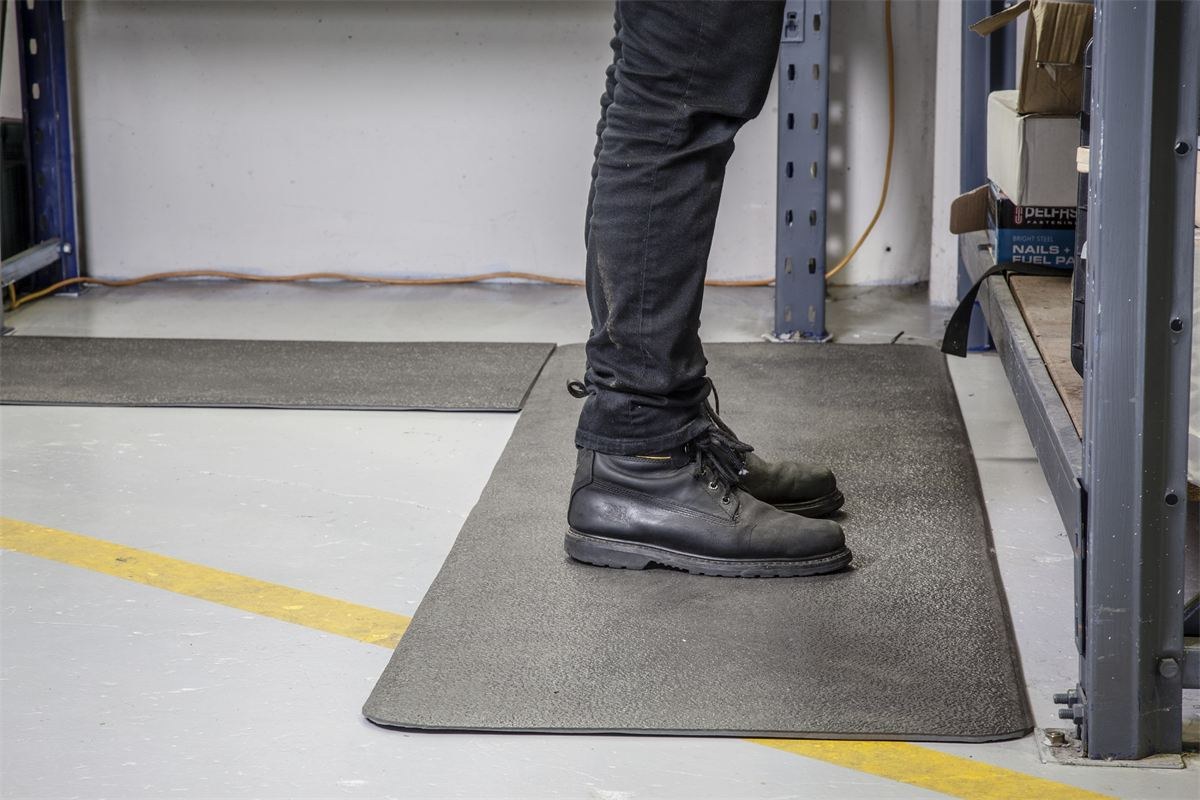
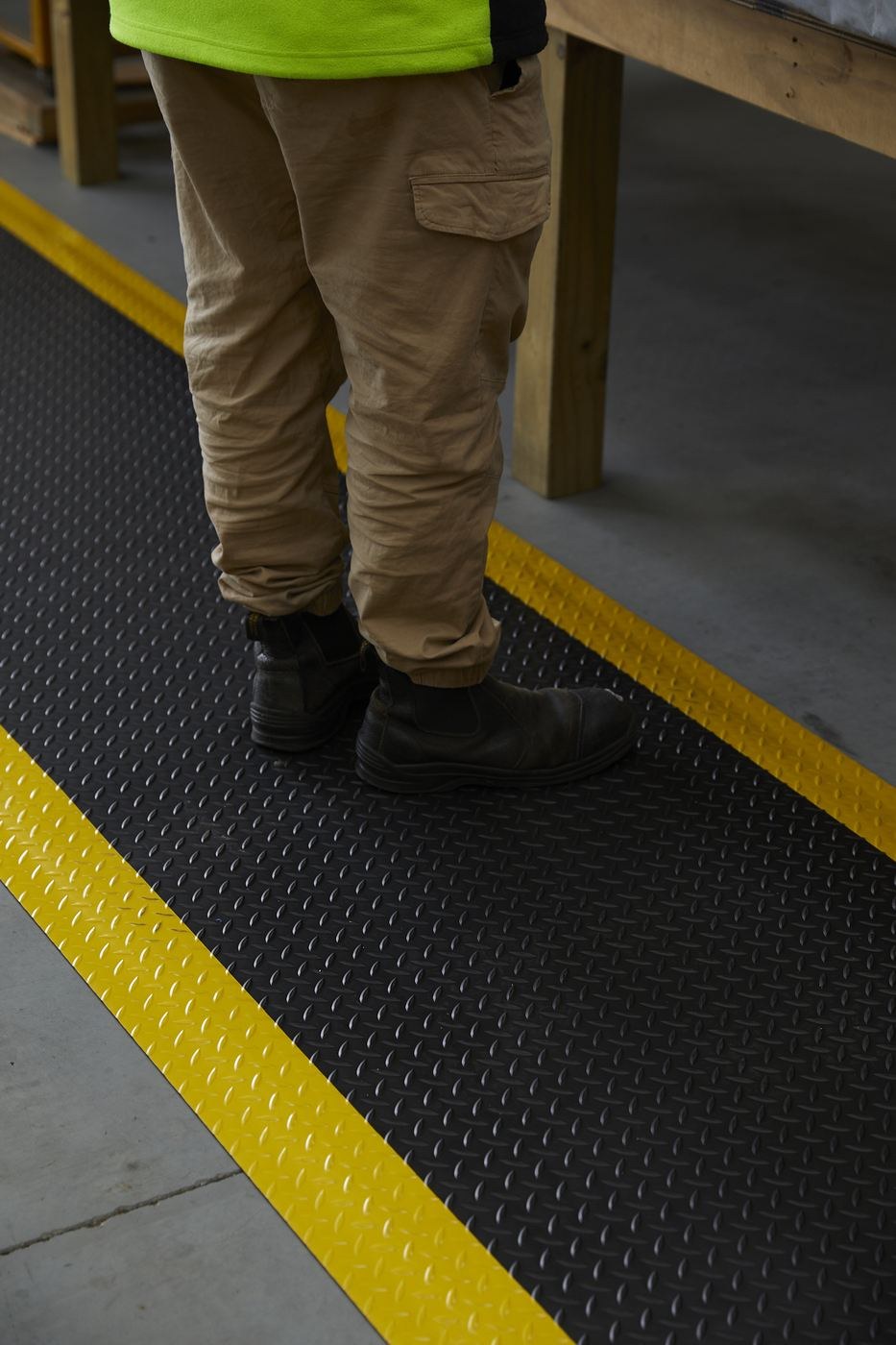
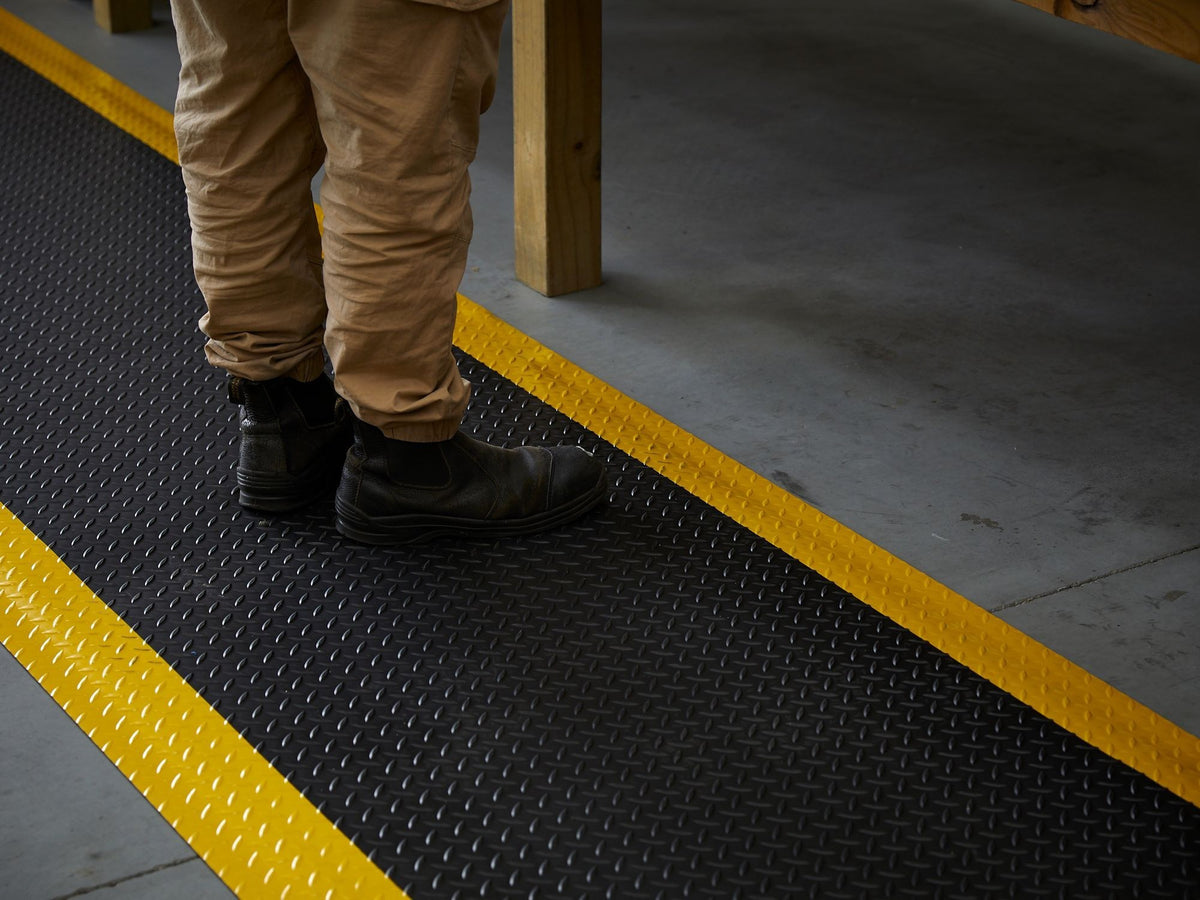
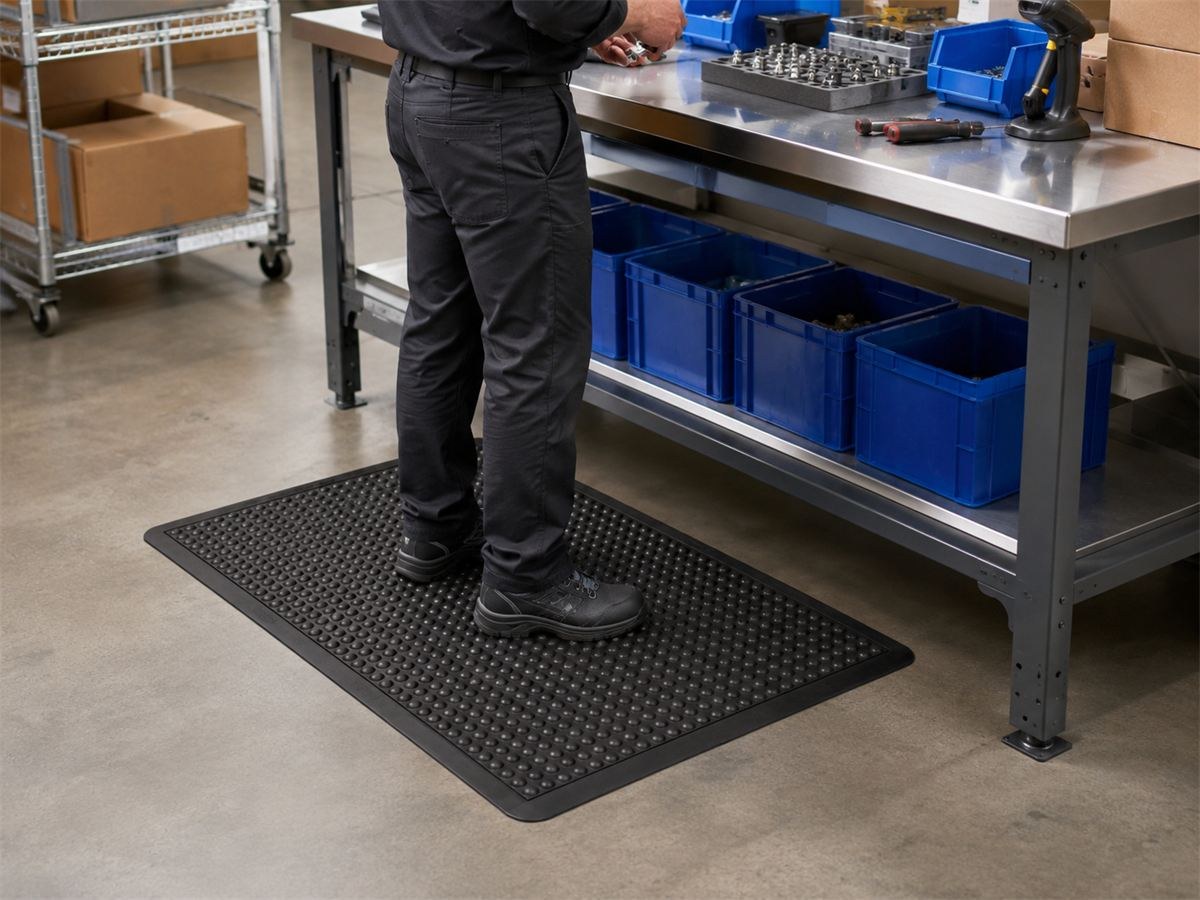
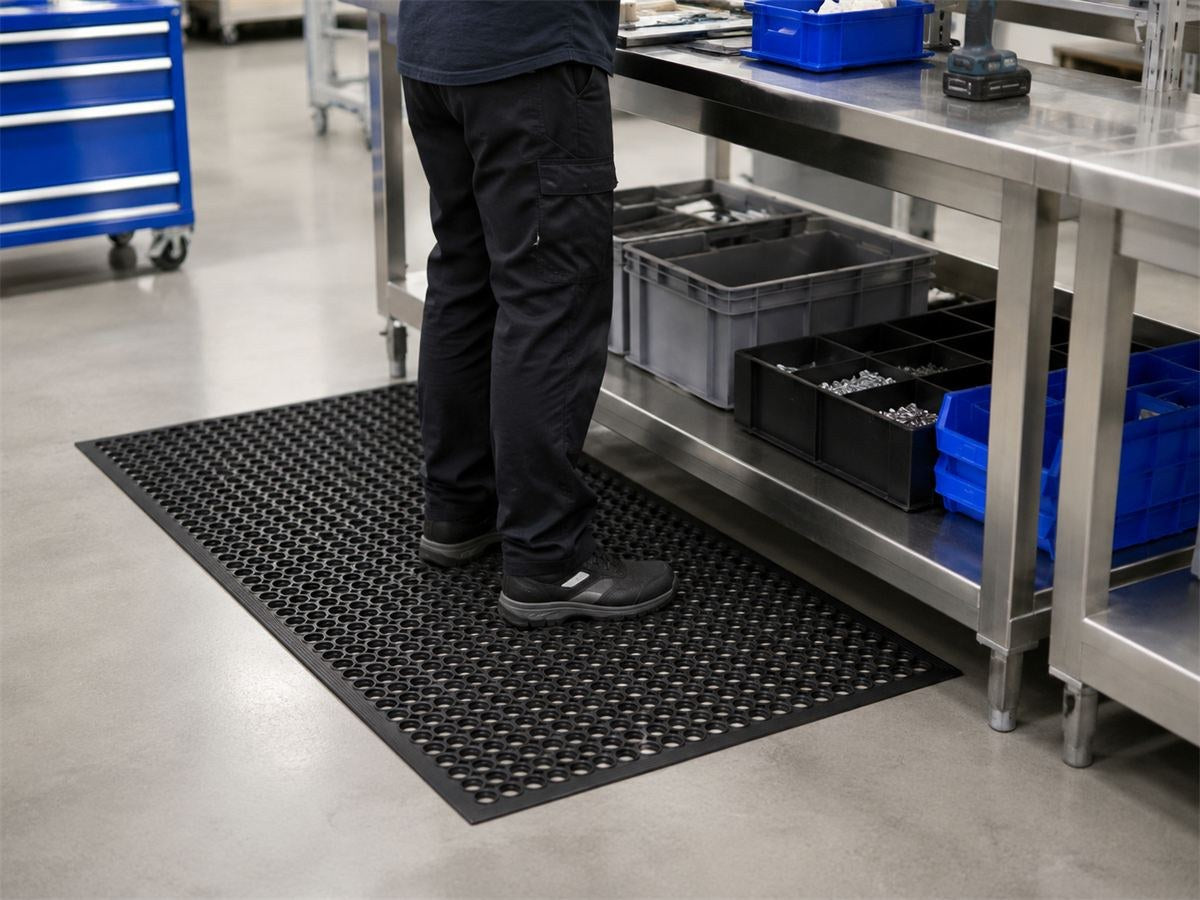
- Workshops, warehouses and workbenches: rubber or high-density foam mats such as O-Zone, DiamondStep, ArmourStep and EasyStep, ready-made or cut to length.
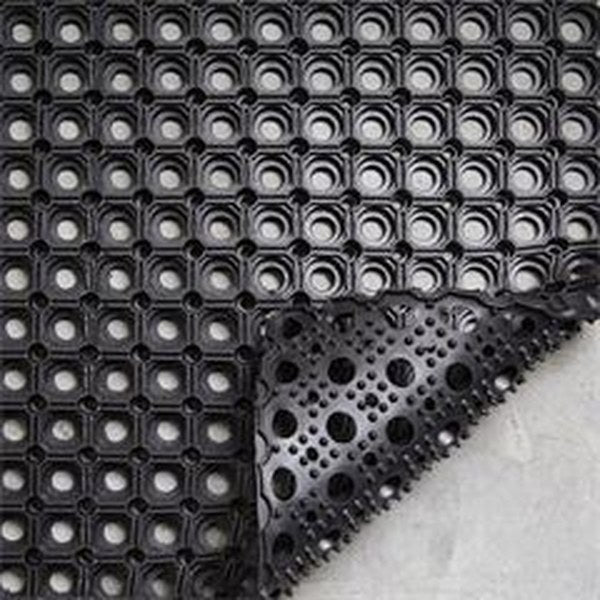
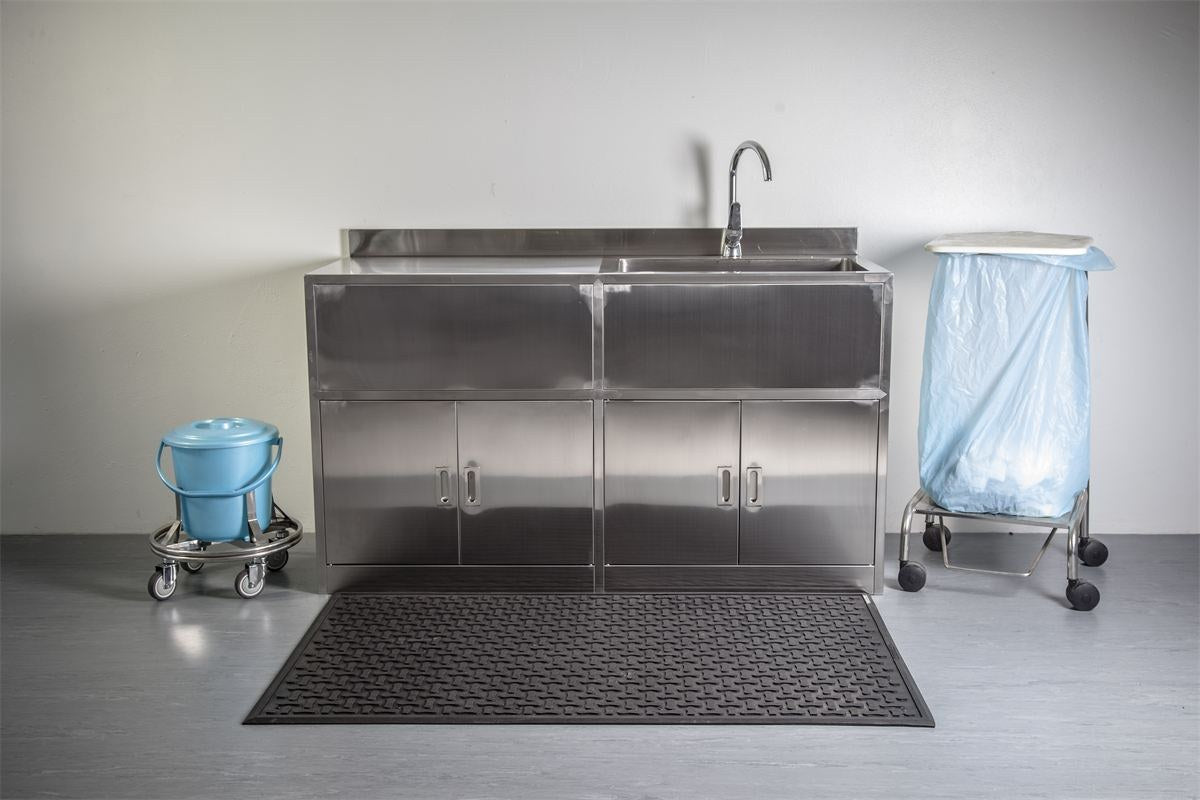
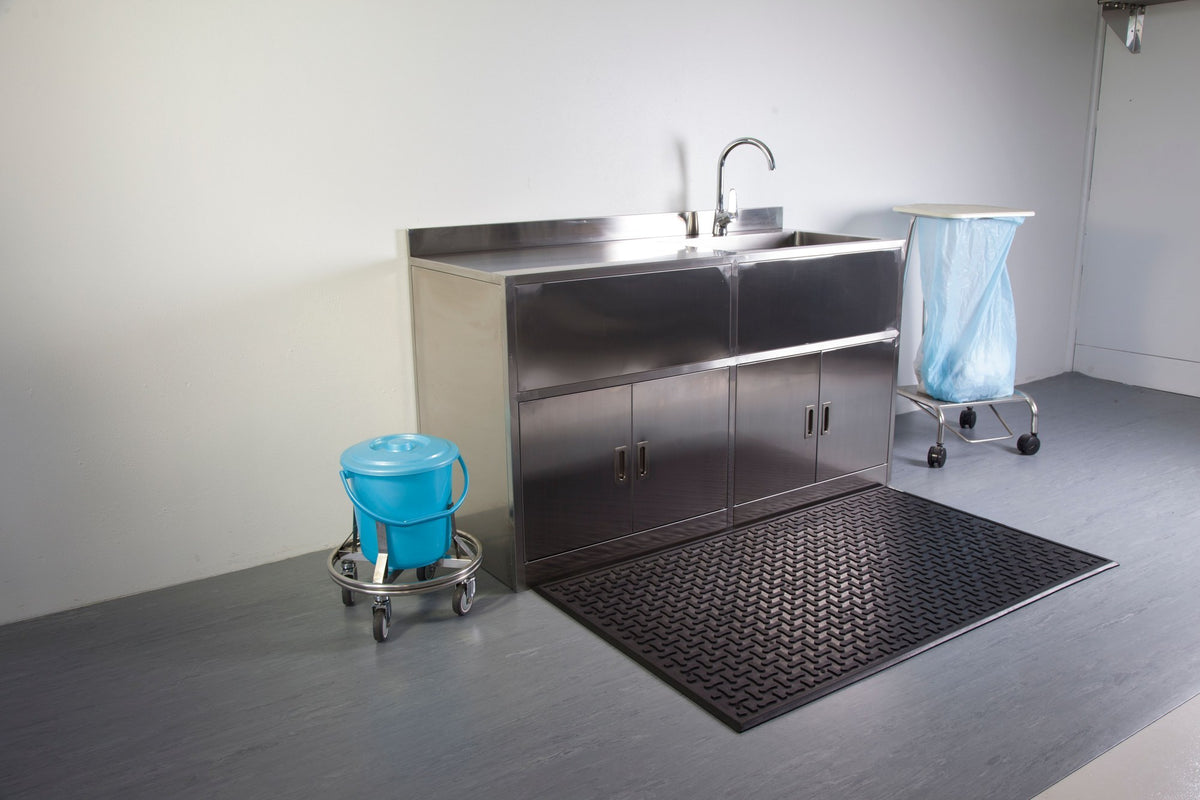
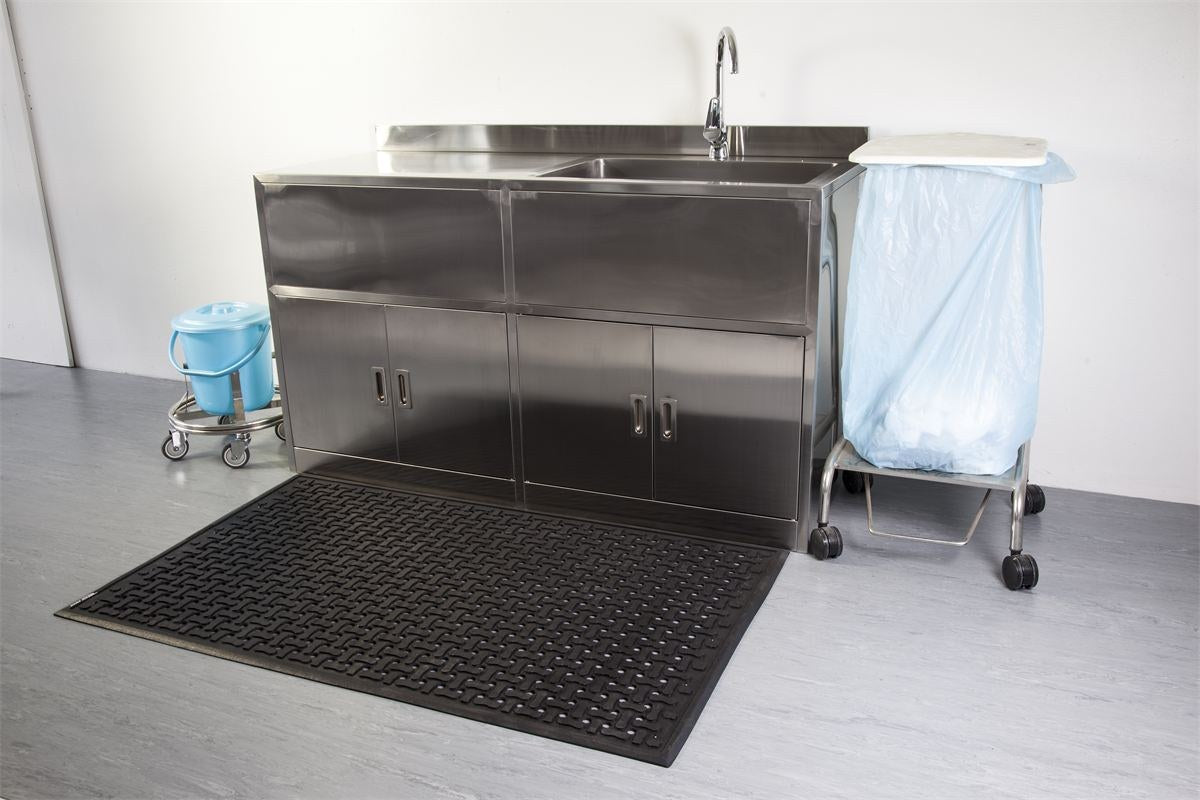
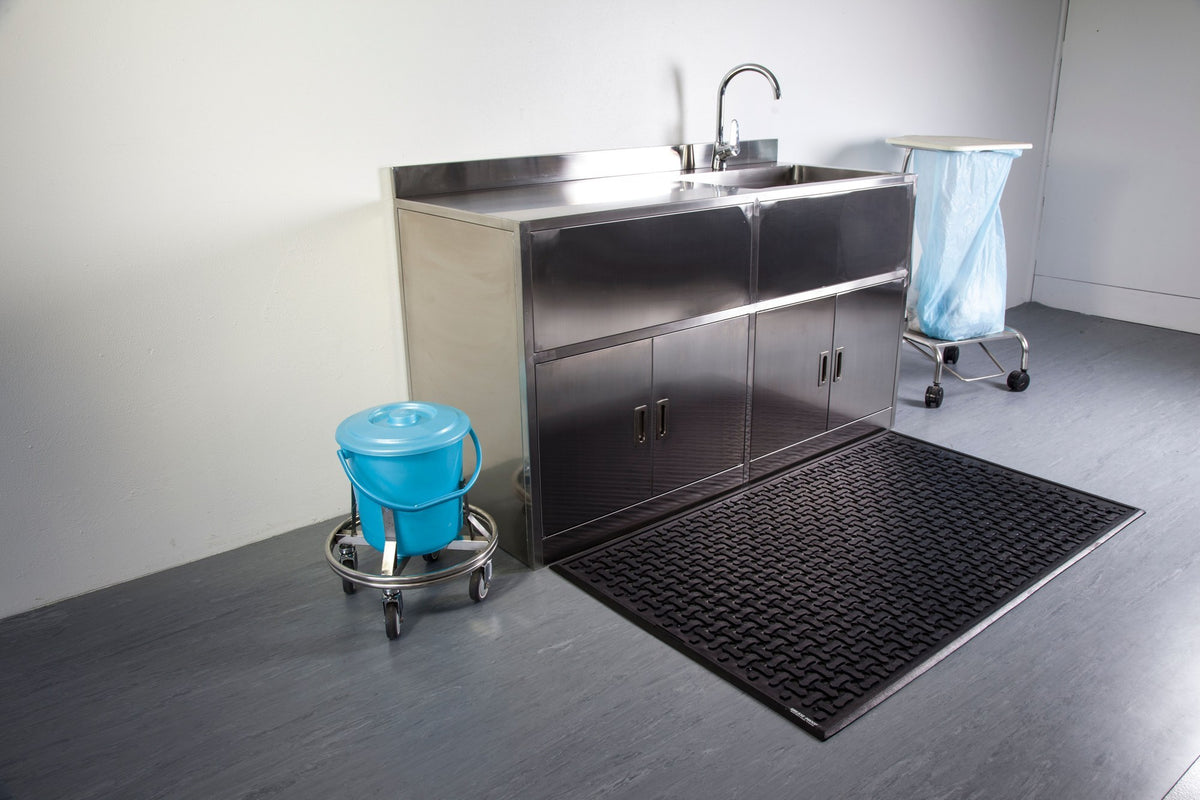
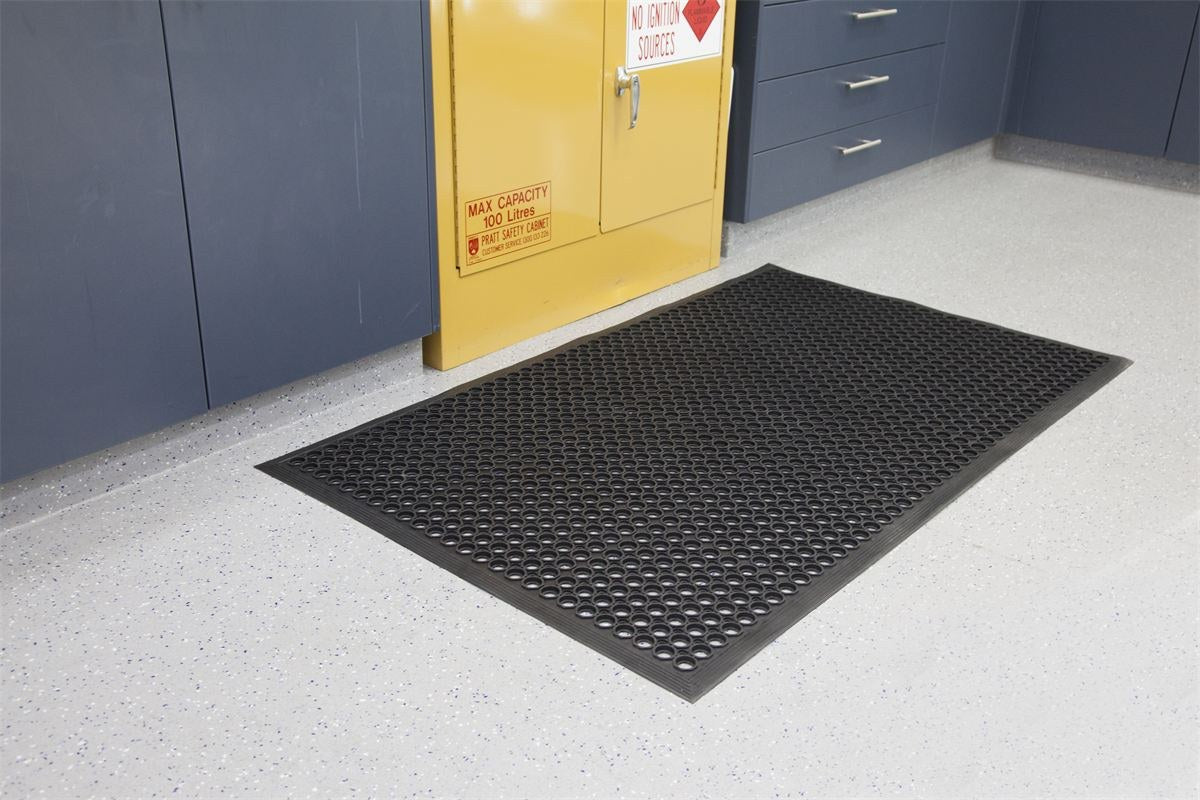
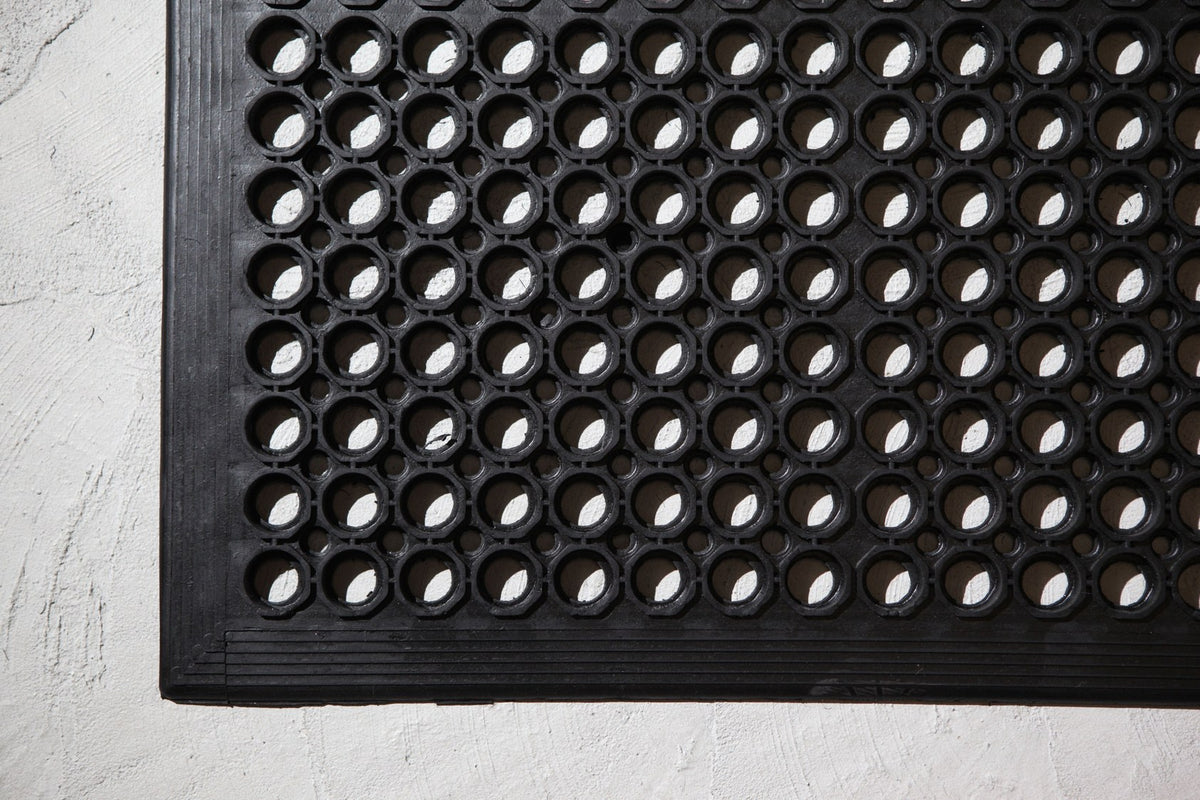
- Wet areas and commercial kitchens: free-draining nitrile rubber mats such as WorkSave, ComfortFlow and ComfortScrape. Choose a grease-resistant (terracotta) mat where oil or fat is present.
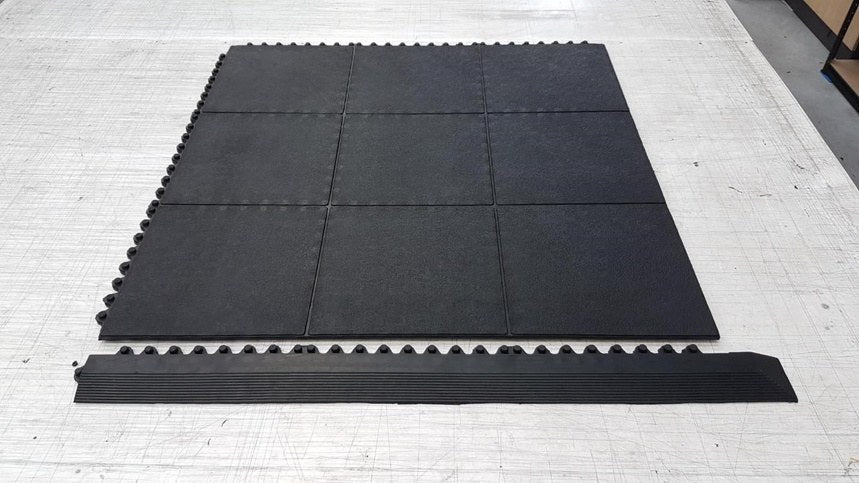
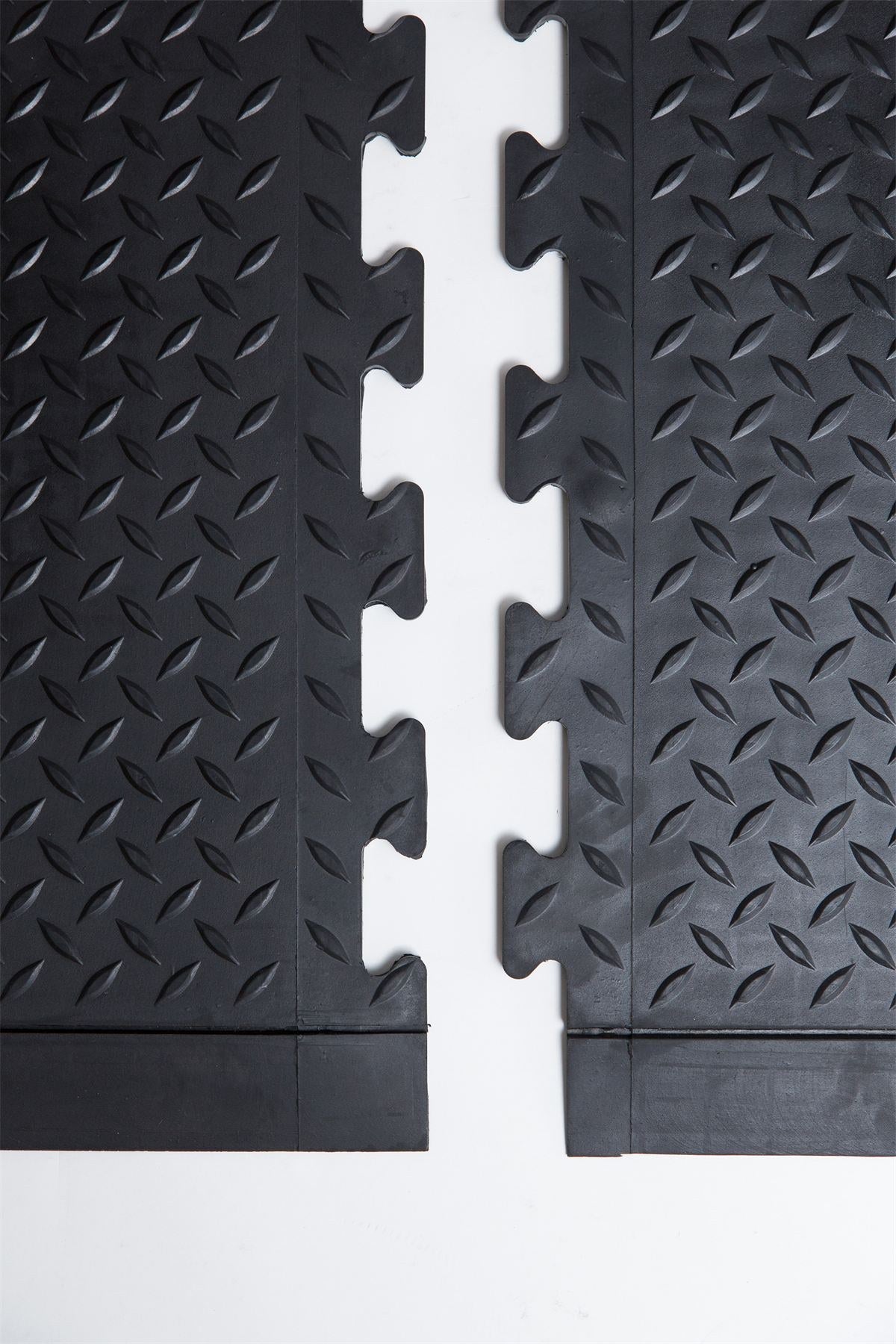
- Long runs: interlocking ComfortLock and MultiZone mats join together to cover a full bench or production line.
Frequently asked questions
Do anti-fatigue mats really work?
Yes. Standing still on a hard floor loads the same muscles and joints all day. A cushioned mat encourages small movements that reduce fatigue, and it's a common workplace health and safety measure where people stand at one station.
What thickness of anti-fatigue mat is best?
For offices and standing desks, about 19mm of foam is comfortable. For industrial work, 10 to 16mm rubber mats give comfort and durability. For the heaviest use, the 24mm ZeroMat is extra heavy duty.
Can anti-fatigue mats be used in wet areas?
Choose a free-draining rubber mat such as WorkSave, ComfortFlow or ZeroMat. Foam desk mats are for dry areas only.
More matting: Chair mats · Standing desk mats · Rubber matting · Non-slip & safety matting · Entrance & outdoor mats · Workshop mats · Commercial kitchen mats · All matting